
MyoGenius
AI assistant for doctors: the doctor treats, the app records and analyzes.
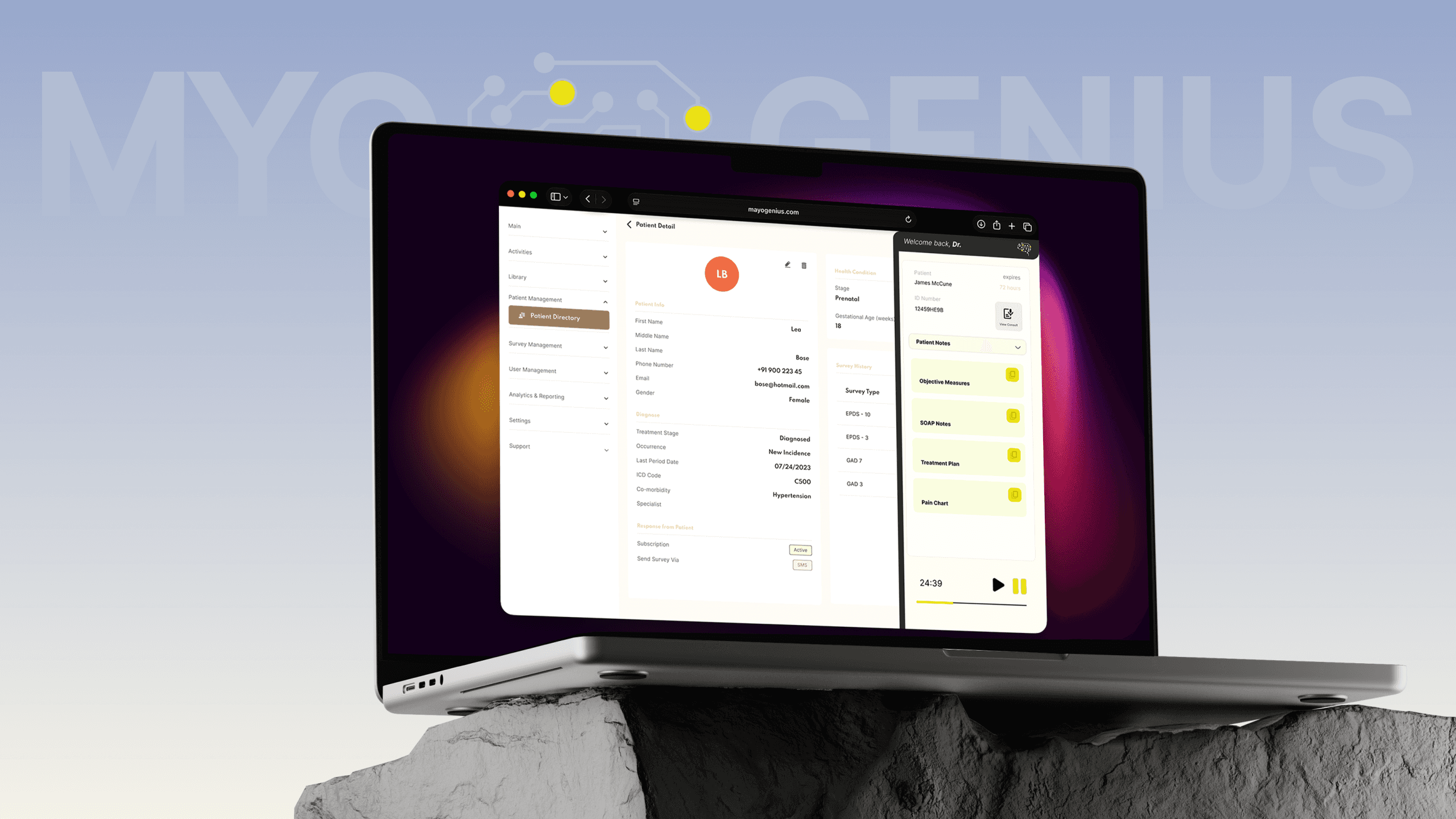
A physiotherapist from the USA came to us with the idea to make patient intake easier and to automate creating medical records during visits.
Project goal:
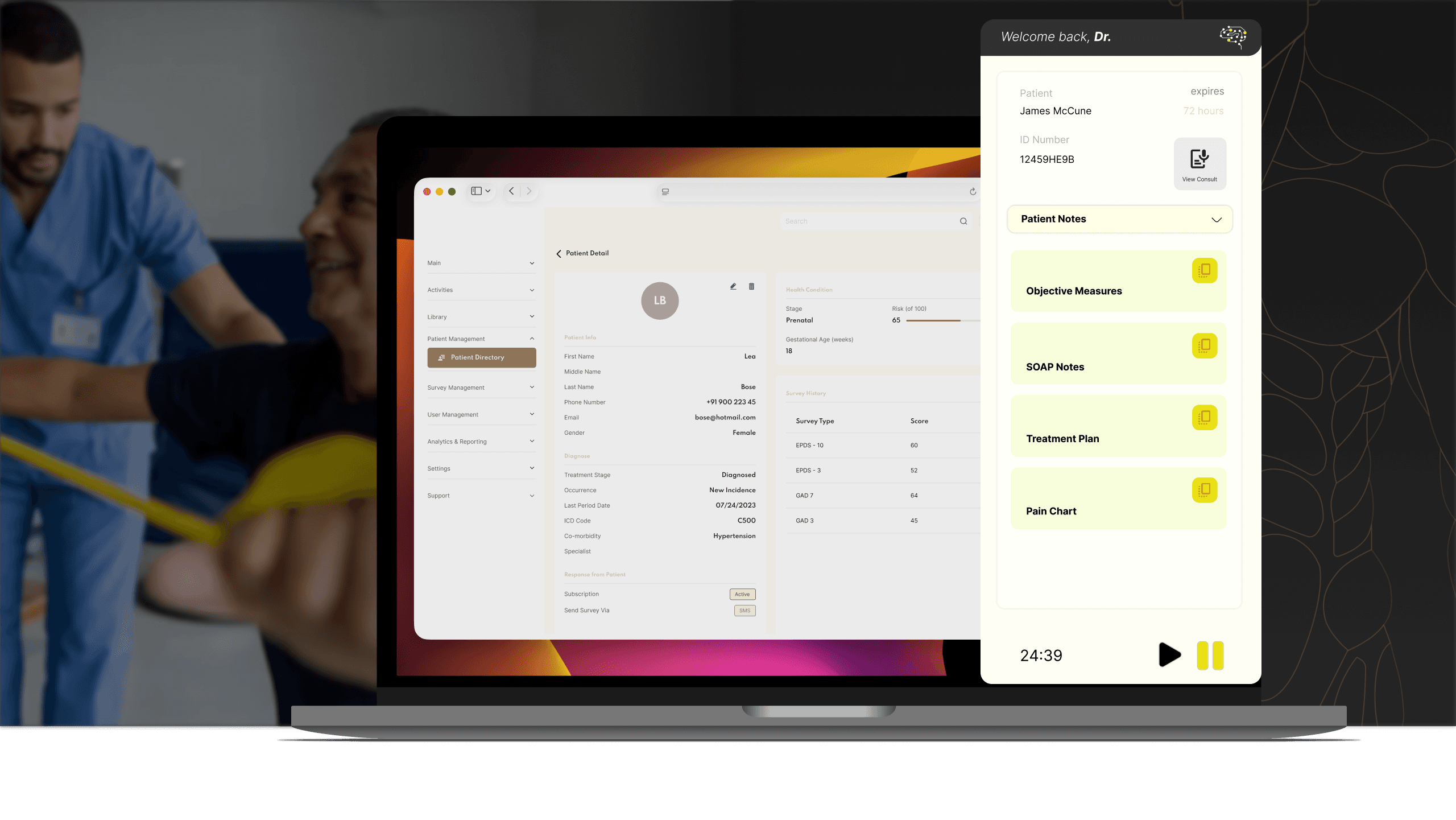
create a tool for physiotherapists that automatically listens to patient consultations, transcribes and organizes key information, fills out medical reports, and prepares recommendations. In other words, it automates medical record creation and significantly improves the doctor’s efficiency.
The solution removes routine tasks from the physiotherapist, allowing them to fully focus on the professional examination, which is the top priority in this specialty. By automating patient record entries, it also minimizes the risk of losing important information due to multitasking or doctor overload.
MVP development
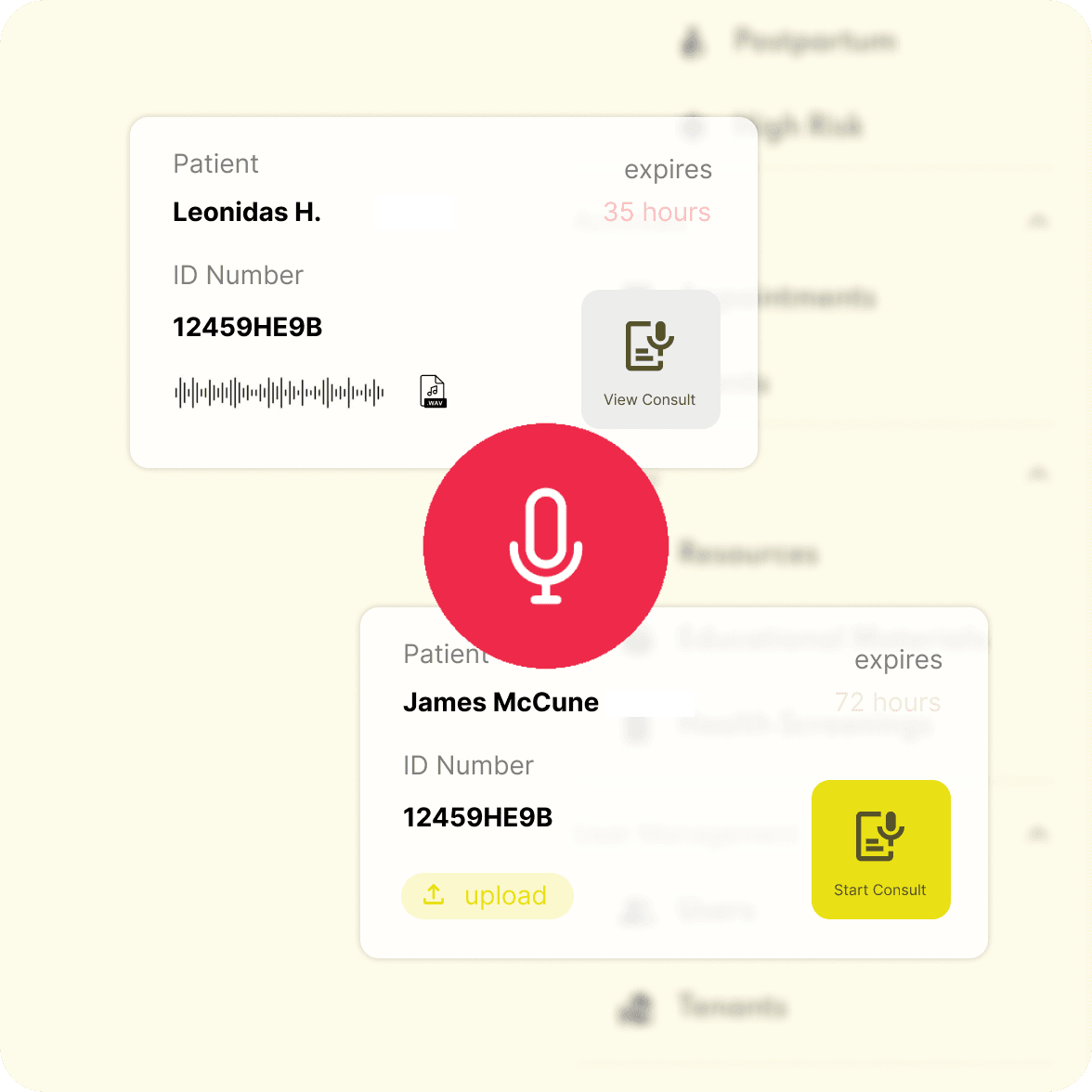
The client’s main goal was to create a prototype to attract investment for a full-featured app aimed at simplifying doctors’ work in the United States. We developed an MVP that was tested with a group of physicians to assess the solution’s viability. In the end, the client received a fully functional app with a wide range of features and the potential to evolve into a full-fledged SaaS solution.
MyoGenius challenges
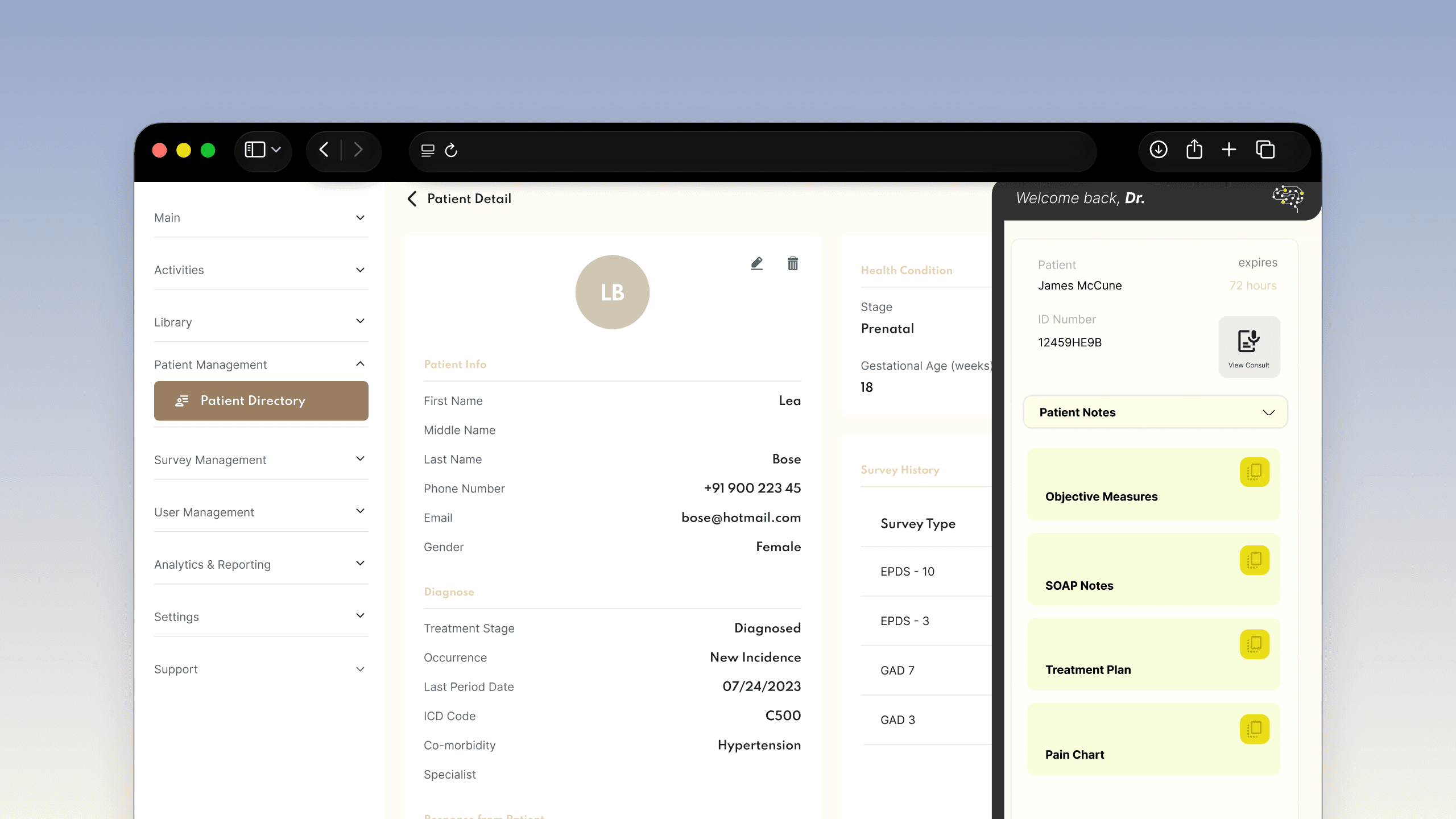
1. At the initial stage, the client had no ready-made design, full concept, or development algorithms — only sketches in Figma existed.
3. Special attention was given to the anatomical model with pain level indicators, which became a crucial part of the app.
2. Working closely with the client, we defined the list of screens (adjusted several times), agreed on key features, AI integration, and data generation algorithms. We independently developed the app’s user flow.
4. We implemented integrations with Firebase for authentication and temporary data storage, as well as with OpenAI for transcription, screen scanning, and generating medical reports. The app was fully functional on the front-end without requiring a back-end.
AI integration
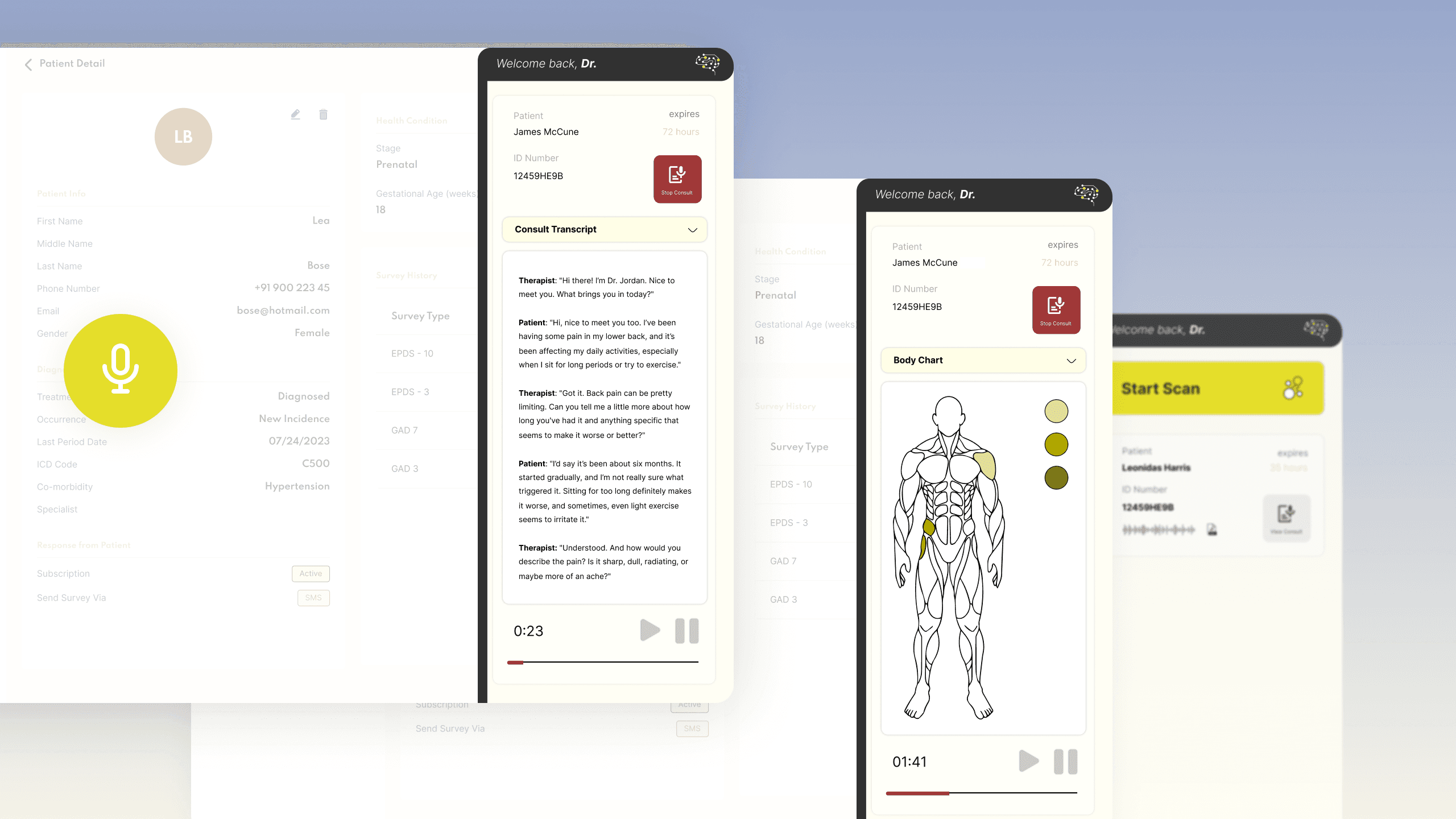
In this app, AI:
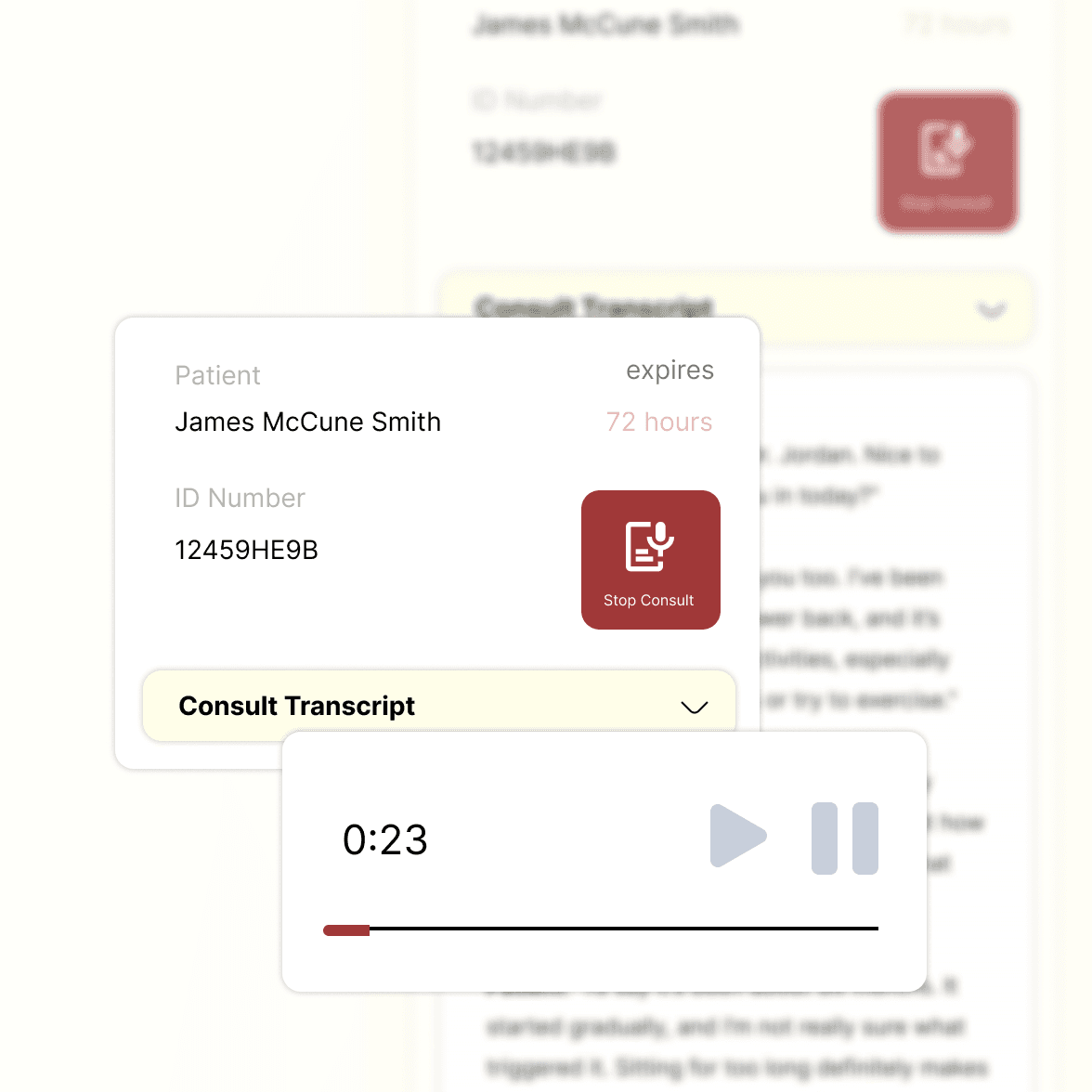
creates accurate transcriptions of doctor-patient conversations.
structures data for the doctor, suggesting possible conditions based on the collected information.
keeps the doctor in full control of recommendations, allowing them to modify or add their own notes
What about the tech stack?
The app is fully implemented on the front-end to simplify development and avoid burdening the client with additional back-end architecture.
Main integrations: Firebase — user authentication and temporary data storage; OpenAI — conversation transcription, screen scanning, and medical report generation
What does this mean for people?
The app helps doctors collect patient information faster and more accurately, automates routine tasks, and reduces the risk of errors, while keeping the final decision in the doctor’s hands. This creates a safer, more efficient, and more personalized approach to healthcare, with the potential to scale in any country.
You might like these cases
